Overflow Call Handling and After-Hours Call Routing with AI Dental Agent CAASI

Last Updated on 1 September, 2026
The average dental practice misses 32 to 38% of incoming calls during regular business hours — not after hours, not on weekends, but during the standard workday when front desk teams are managing check-ins, insurance calls, and in-office patients simultaneously. Each missed new patient call represents an estimated $850 in first-year revenue and over $8,000 in lifetime patient value.
The structural problem is that most dental practices treat missed calls as a staffing issue — something to fix by adding headcount. But 58% of missed call interactions involve new patients according to TrueLark’s analysis of 8 million patient conversations, and most of them don’t call back. They move to the next practice on their search results.
Overflow call handling and after-hours routing address this as an operational problem, not a staffing one. This guide covers what those systems do, where voicemail falls short, how an AI dental agent like CAASI closes the gap, and which metrics actually tell you whether it’s working.
Key Takeaways
| Topic | What It Means for Your Practice |
|---|---|
| The scale of the problem | The average practice misses 32-38% of calls during business hours. Only 14% of new patients leave a voicemail — the rest move on. |
| Why voicemail fails | 80% of callers hang up without leaving a message. A patient who can’t reach you doesn’t wait — they call the next practice. |
| What overflow handling does | Routes unanswered calls to an AI agent that responds in real time: answering questions, capturing lead information, and booking appointments. |
| After-hours value | A meaningful share of new patient searches happen in the evening. After-hours routing captures inquiries that would otherwise be lost until morning. |
| Where CAASI fits | CAASI handles overflow and after-hours calls across phone, chat, and text, integrating directly with Dentrix, Eaglesoft, Open Dental, and Curve. |
| What to measure | Track missed call rate, after-hours appointment requests, consultations booked via AI, and response time — not just call answer rate. |
Why Missed Calls Are Costing Dental Clinics More Than They Think
Most dental practices are aware they miss some calls. Few have quantified what that actually costs.
A mid-size general practice receiving 800 inbound calls per month, missing 35% of them, with a 30% new patient call rate and a 50% booking conversion rate, loses an estimated $151,200 per year in first-visit revenue alone — before accounting for lifetime patient value. These aren’t dramatic failures. They’re the predictable result of a front desk team doing multiple things at once.
The timing makes it worse. Missed calls cluster around predictable windows: Monday mornings when weekend requests flood the lines, lunch hours when coverage thins, and peak clinical hours when staff are focused on chair-side patients. These are exactly the moments when prospective patients are most motivated to book.
After hours compounds the problem. Patients researching dental options in the evening — comparing clinics, checking reviews, deciding where to call — often try calling before they book online. If no one answers and there’s no alternative, that patient’s decision goes to a practice that was reachable.
What Is Overflow Call Handling?
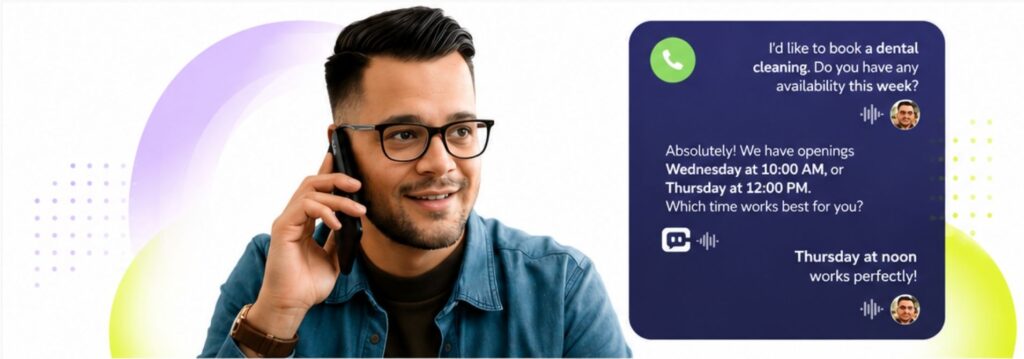
Overflow call handling is an automated layer that activates when your front desk team can’t answer a call — whether because all lines are busy, staff are occupied with in-office patients, or the call comes in outside staffed hours.
Rather than routing to voicemail, the call is handled by an AI dental agent that can continue the conversation in real time. Depending on what the caller needs, the system can:
- Answer common questions about services, hours, insurance, and pricing
- Collect patient information and capture lead details
- Book appointments or consultations directly into your practice management system
- Handle appointment rescheduling requests
- Triage urgent inquiries and route appropriately
For dental clinics, the highest-value overflow interactions are new patient consultations and emergency appointment requests — the calls with the lowest tolerance for friction and the highest cost when lost.
Overflow Handling vs. Voicemail: The Operational Difference
| Voicemail | AI Overflow Handling |
|---|---|
| Patient leaves a message and waits | Patient gets an immediate response |
| 80% of callers hang up without leaving a message | Interaction continues in real time |
| Creates a callback queue for staff | Appointments booked without staff involvement |
| No information captured if caller hangs up | Lead information captured regardless of outcome |
| Patient often calls a competitor in the meantime | Patient’s need addressed before they look elsewhere |
How CAASI Supports Overflow and After-Hours Call Handling
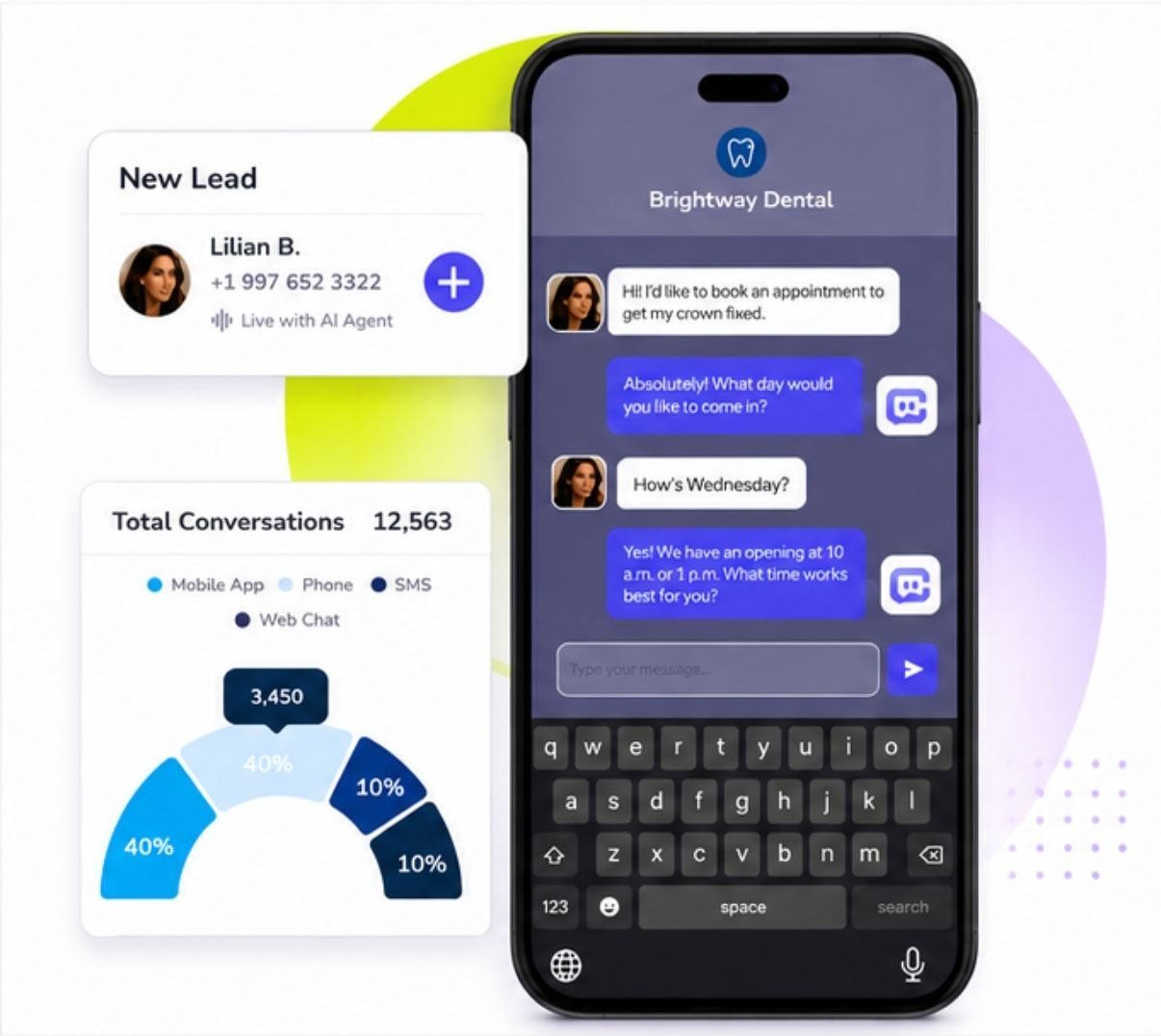
CAASI is WellnessLiving’s AI dental agent, built to handle patient communication across phone, chat, and text. It functions as a receptionist layer that operates continuously — covering overflow during peak hours and handling the full load of inquiries after the office closes.
During Office Hours: Overflow Coverage
When front desk staff are occupied, CAASI activates immediately rather than sending callers to voicemail. It can handle the full range of routine inbound interactions:
- New patient consultation requests
- Existing patient appointment bookings and reschedules
- Questions about services, costs, and insurance coverage
- Emergency triage and urgent appointment routing
Because CAASI integrates directly with Dentrix, Eaglesoft, Open Dental, and Curve, appointments booked through the AI agent sync immediately into your practice management system — no manual entry, no morning reconciliation.
After Hours: Capturing the Evening Inquiry Window
After-hours inquiries represent a specific patient behavior pattern. Someone researching dental options after work, comparing practices, or dealing with a sudden dental concern will often try calling before they commit to an online booking. If that call goes to voicemail, the window closes.
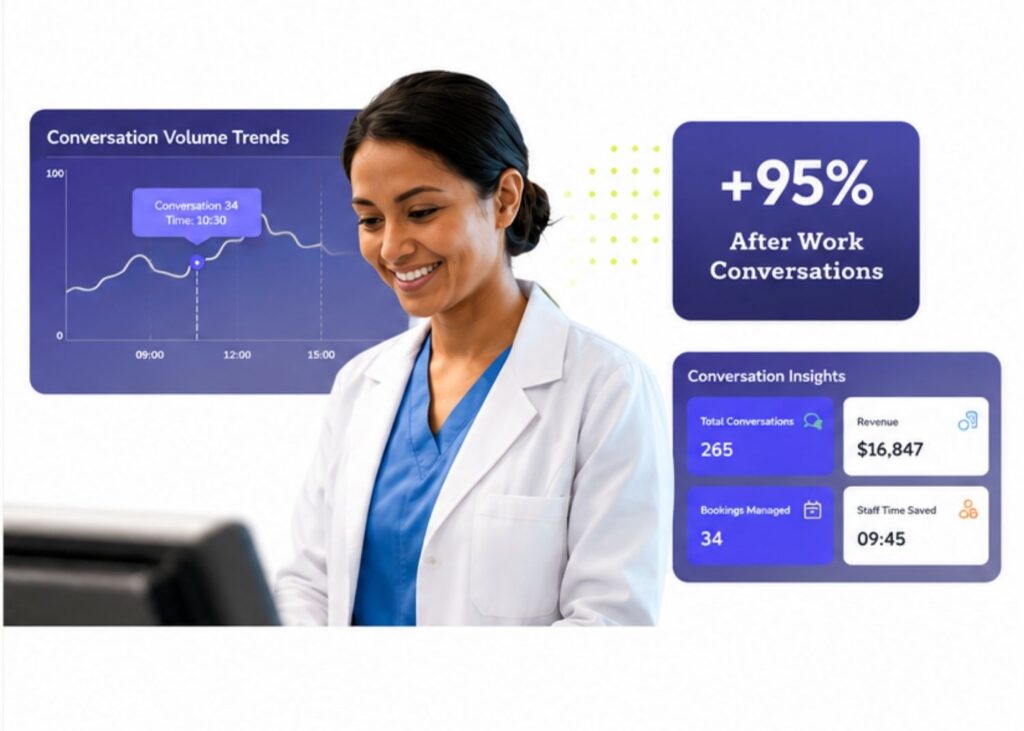
CAASI stays active after the office closes, giving prospective patients a real interaction rather than a recorded message. A new patient can book a consultation at 9pm. An existing patient can reschedule a missed appointment without waiting until morning. Questions that would otherwise sit in a voicemail queue get answered in real time.
The practical result for the front desk team: fewer callbacks to manage in the morning, and a log of overnight interactions that arrived as scheduled appointments rather than unanswered messages.
Which KPIs Should Dental Clinics Track?
Tracking the right metrics is what separates a well-functioning overflow system from one that looks active but isn’t moving the needle. These are the indicators that tell you whether your overflow and after-hours setup is working.
| Metric | What It Tells You |
|---|---|
| Missed call rate | Your baseline. Industry average is 32-38% during business hours. If yours is above that, overflow handling is the structural fix. |
| After-hours appointment requests | How many bookings are coming in outside staffed hours. A growing number here signals strong after-hours demand worth protecting. |
| AI-assisted consultations booked | Appointments booked by the AI agent specifically. The clearest measure of overflow ROI. |
| Response time to new patient inquiries | Time from first contact to first response. Faster response correlates directly with higher conversion rates. |
| Voicemail abandonment rate | Percentage of callers who hang up before leaving a message. High abandonment (common above 80%) signals voicemail isn’t serving patients. |
| Staff callback volume | How much time your front desk spends returning missed calls. A reduction here is a direct measure of operational efficiency gained. |
Review these monthly rather than quarterly. Overflow call volume patterns shift with staffing, seasons, and marketing campaigns — monthly reviews let you spot and address gaps before they compound.
Evaluating an AI Dental Agent for Your Practice
The right question for a dental clinic evaluating overflow call handling isn’t whether AI can answer calls — it can. The more useful question is whether the system integrates deeply enough with your existing practice management workflow to be genuinely useful, or whether it creates a new layer of manual reconciliation work.
The key capabilities to evaluate:
- Direct integration with your PMS — appointments that sync automatically, no manual entry required
- Real-time response across phone, chat, and text — patients use all three
- New patient consultation booking, not just message capture
- After-hours coverage that reflects your actual scheduling availability
- Reporting that shows interactions handled, appointments booked, and calls converted
CAASI is built specifically for this workflow. It connects to the major dental PMS platforms, handles patient interactions across channels, and gives your front desk team a clear picture of what was handled overnight and during peak hours — without adding to their callback queue.
To see how CAASI handles a real patient interaction, book a free WellnessLiving demo.
FAQs About Overflow Call Handling for Dental Clinics
-
How do overflow call handling and after-hours routing differ?
Overflow call handling activates during business hours when staff are unavailable to answer — all lines are busy, the team is occupied with in-office patients, or call volume spikes beyond capacity. After-hours routing handles calls when the office is closed entirely. In practice, a well-configured AI dental agent covers both scenarios with the same system, applying different responses based on whether the clinic is open or closed.
-
Won’t patients prefer talking to a human receptionist?
Patients prefer getting an answer. A 2024 study by 411 Locals found that only 37.8% of incoming calls across service businesses were answered by a live person — and 80% of callers who reach voicemail hang up without leaving a message. An AI agent that answers immediately, provides accurate information, and books an appointment is a significantly better patient experience than a voicemail prompt that most callers abandon. Patients who reach a human have a strong preference for responsiveness first; the channel is secondary.
-
What types of inquiries should dental clinics automate vs. escalate?
Routine bookings, reschedules, service questions, pricing inquiries, and appointment confirmations are well-suited to automation. Emergency triage — a patient describing acute pain, swelling, or trauma — should route quickly to a staff member or emergency line. A well-configured AI dental agent handles the routing decision automatically based on the nature of the inquiry, not a fixed script.
-
How do I measure whether the system is actually working?
Compare your missed call rate and after-hours appointment volume before and after implementation. Track AI-assisted consultations booked as a standalone metric — this is your clearest measure of direct ROI. Also monitor staff callback volume: a reduction in the number of voicemails your team returns each morning is a direct measure of operational time recovered. If those numbers aren’t improving within the first 60 days, the configuration — not the technology — likely needs adjustment.