
How to Keep the Yoga Mats Clean in Your Yoga Studio or Fitness Center
Last Updated on 13 March, 2026
Running a yoga studio means more than leading meaningful flows. It means safeguarding the health and well-being of every participant. Shared yoga mats can become a silent vector for bacteria if not cleaned properly.
To preserve trust, maintain hygiene, and extend the life of your gear, a smart, effective cleaning strategy is nonnegotiable. Below, you’ll find how to sanitize, deep clean, roll, and store mats in a way that supports both cleanliness and longevity.
Key Takeaways
- Clean after each use – Train your staff to disinfect yoga mats with wipes or sprays to prevent bacteria buildup and keep shared mats safe.
- Choose safe disinfectants – Avoid harsh chemicals like bleach, alcohol, or ammonia; opt for hypoallergenic, skin-safe, and fragrance-free cleaners.
- Store properly and deep clean regularly – Roll mats correctly, keep them off the floor and out of direct sunlight, and schedule monthly deep cleans for long-term care.
The best way to sanitize and clean a yoga mat
Just like any other gym equipment, shared yoga mats should be cleaned between each use. Studies have shown that nearly 75% of public exercise equipment tested positive for Staphylococcus aureus, the highly contagious bacteria that cause staff infections.
To protect your clients, clean shared mats and any other equipment used with a disinfectant after each class.
If you need to facilitate a quick turnover between larger classes, it’s not uncommon for yoga studios to ask their students to clean the mat they used after the class is over. However, you’ll need to provide them with cleaning materials that will quickly and safely get the job done.
Disinfectant wipes are an easy option to distribute, but they may be a large cost investment over time. If you want a greener option for your studio, use spray bottles of disinfectant and small reusable cloths. Be sure to have a clearly labeled “used” bin for these cloths so they can be washed at the end of the day or week by your staff.
The best disinfectant for yoga mats
There are many commercial disinfectants on the market geared toward cleaning yoga mats. Sometimes yoga products can be sold at a premium, so it’s a good idea to check these cleaners against those sold for standard gym equipment. You may be able to get the same ingredients for less when you remove the yoga label. As a studio owner, those savings can add up quickly.
Avoid any harsh chemicals such as bleach, ammonia, or alcohol. These can seep into the mat, causing it to break down faster and exposing those who use it to toxic chemicals.
People will be in direct contact with these mats while sweating, so make sure whatever cleaner you use is hypoallergenic and skin-safe. It’s also a good idea to choose one that’s fragrance-free to avoid triggering asthma or allergies in your clients.
How to roll or fold yoga mats to keep them clean
If you have plenty of space, you can fold your yoga mats or hang them on a bar. This helps them lie flat during classes, but takes up much more space when storing them. Most studios opt to roll the mats so they take up as little space as possible and look more aesthetically pleasing.
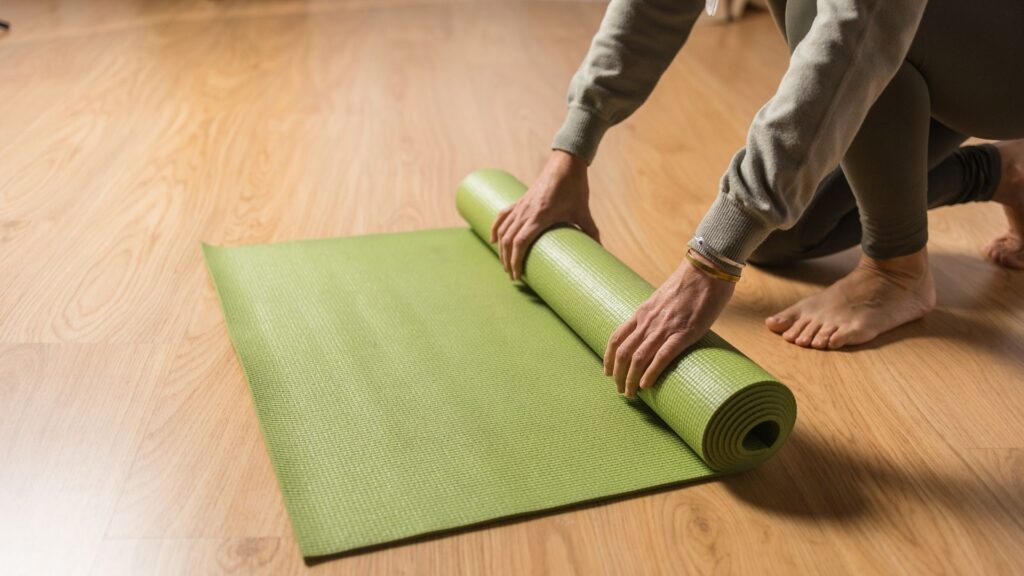
To keep your yoga mat clean when rolling it up for storage, place it flat on the ground. Then fold it in half before rolling it up. This keeps one side from ever touching the floor and ensures the cleanest surface for the next user.
The best way to store yoga mats
Once rolled or folded for storage, yoga mats should be stored off the floor in a clean and dry area. Large shelves or hanging storage racks are often the best solution for keeping them clean in between classes. However, if you need to store them on the floor, use a large basket or tall storage bin.
Overexposure to sunlight can also damage yoga mats over time, causing their colors to fade or the rubber in them to break down faster. To help them last longer, store them away from direct sunlight.
How often should you deep clean your yoga mats?
No matter how clean your studio is, it’s natural that over time your yoga mats will get dusty or dirty from frequent use on the floor. Set up a schedule for deep cleaning your yoga mats to keep them looking fresh. Depending on your class frequency, this may need to be done monthly or weekly.
Professional cleaners recommend soaking yoga mats for 3-5 minutes in a large tub of lukewarm water and a little bit of organic dish soap. Then scrub them with a soft cloth, rinse, and squeeze out the water. Finally, hang them to dry in a sunny and breezy spot.
WellnessLiving makes it easy to create cleaning schedules for your staff, so your studio and your yoga mats always look their best. Book a free demo today to see just how easy running a yoga studio can be.
❓ FAQs About Cleaning Yoga Mats ❓
Sometimes. Check with the manufacturer’s website for cleaning recommendations. Some yoga mats can be washed in a gentle cycle, in cold or warm water with a mild detergent. However, others may become waterlogged, disfigured, or torn in the wash.
Usually, yes. Most disinfectant wipes that are safe enough for your skin should be safe to use on your yoga mat as well. Always spot test new cleaners in a small area to be sure.
However, alcohol-based cleaners can soak into the mat and break down the material over time. They may be ok for an occasional disinfectant, but should not be used on a regular basis.
Yes, unfortunately, bed bugs and other small insects can infest the porous surfaces of yoga mats — much in the same way they would cloth. For this reason, some studios choose not to allow students to bring in their own mat.
If your students want to use a personal mat due to hygiene concerns, you can put in place standards that only allow personal yoga mats that pass an inspection. You can also encourage students to clean community mats before using them, as well as after.
Yes, most mild cleaners that are safe for you to touch are safe to use on your yoga mat. Dilute the cleaner with water to help keep too much of it from being absorbed by the mat.